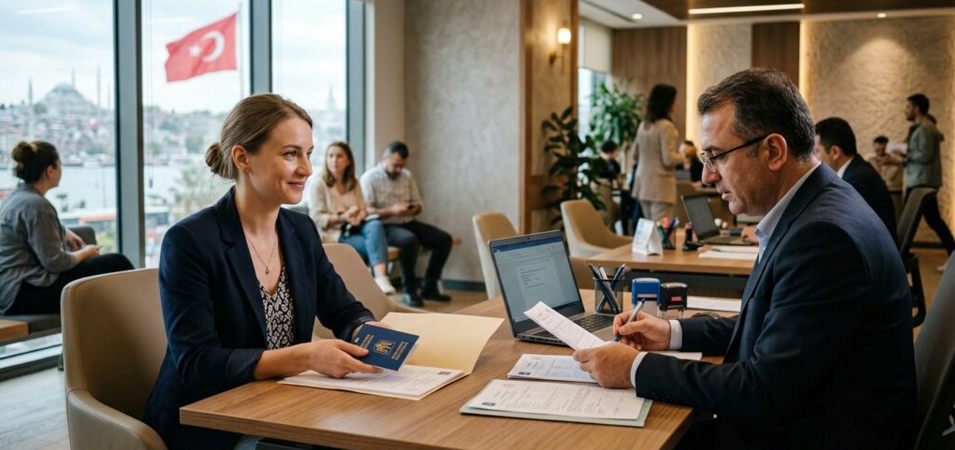
Turkey is a popular destination for foreigners who want to stay for more than a short holiday.
International professionals, expatriates, digital nomads, medical travellers, athletes, students, business executives, relocating families and long-term visitors may want to remain in Turkey for 3 months, 6 months, 9 months, one year or even longer.
But one important question comes up again and again:
How can foreigners legally stay in Turkey for more than 90 days?
As a general rule, a visa or visa exemption cannot provide more than 90 days of stay within any 180-day period. Foreigners who want to remain beyond their permitted visa or visa-free period generally need an appropriate residence permit, work permit or another legally recognised status.
This guide explains the main legal options for a long-term stay in Turkey, including residence permits, work permits, student and family residence, property ownership, medical treatment and long-term accommodation.
Can Foreigners Stay in Turkey for More Than 90 Days?
Yes.
Foreigners can stay in Turkey for longer than 90 days if they have an appropriate legal basis for doing so.
According to Turkey’s Presidency of Migration Management, foreigners who have completed 90 days within a 180-day period and want to remain in Turkey must generally apply for a residence permit category for which they meet the conditions.
Depending on your circumstances, possible options may include:
- Short-Term Residence Permit
- Family Residence Permit
- Student Residence Permit
- Long-Term Residence Permit
- Valid Work Permit
- Other special residence categories
The correct option depends on why you want to stay in Turkey.
What Is the 90 Days Within 180 Days Rule in Turkey?
For most foreigners travelling under a visa or visa exemption, the maximum stay cannot exceed 90 days within a 180-day period.
This is sometimes called the Turkey 90/180 rule.
For example:
If you spend 90 days in Turkey and then leave the country for a few days, you should not assume that you can immediately return for another 90 days.
Your total days spent in Turkey within the relevant 180-day period are taken into account.
Therefore, foreigners planning a long-term stay should not rely on repeated short exits from Turkey to extend their stay.
How Can I Stay in Turkey for 6 Months?
If you want to stay in Turkey for six months, you will generally need a status that covers the period beyond your authorised visa or visa-exemption stay.
For many foreigners, this means investigating whether they qualify for an appropriate residence permit.
Simply booking:
- A six-month hotel stay
- A furnished apartment
- A serviced residence
- Corporate housing
- A long-term rental apartment
does not automatically provide six months of immigration permission.
Your accommodation and your legal right to remain in Turkey are separate matters.
What Is a Short-Term Residence Permit in Turkey?
The Short-Term Residence Permit is one of the main residence categories that may be relevant to foreigners who want to stay in Turkey for an extended period.
According to the Presidency of Migration Management, short-term residence permits may be available for several recognised purposes.
These can include foreigners who:
Own Residential Property in Turkey
Foreigners who own qualifying residential property in Turkey may be able to apply for a short-term residence permit, subject to current legal requirements.
Property ownership does not mean that every property purchase automatically guarantees approval.
Have Business or Commercial Connections
Foreigners establishing business or commercial connections in Turkey may qualify under this category.
For stays exceeding three months for this purpose, supporting documentation may be requested.
Stay in Turkey for Tourism Purposes
Tourism is one of the purposes recognised within Turkey’s short-term residence permit framework.
However, applicants may be asked to provide information about their travel and accommodation plans, and approval is not automatic.
Receive Medical Treatment in Turkey
Foreigners receiving medical treatment in Turkey may qualify for a short-term residence permit when the applicable conditions are satisfied.
This can be particularly relevant to international patients receiving longer-term medical treatment.
Conduct Scientific Research
Foreign researchers may qualify where the appropriate permissions and documentation are available.
Participate in Certain Education or Training Programmes
Some recognised courses, training programmes and educational activities may also provide a basis for a short-term residence permit.
Can I Get a Residence Permit Just Because I Rent an Apartment?
No.
Renting an apartment does not automatically qualify you for a residence permit.
This is particularly important for foreigners searching online for:
“rent apartment in Turkey and get residence permit”
or
“long-term rental Turkey residence permit.”
A rental agreement can form part of your accommodation documentation where relevant, but residence permit eligibility is determined separately by Turkish immigration authorities.
A 12-month rental agreement does not automatically provide a 12-month right to stay in Turkey.
Can I Stay in Turkey Long-Term If I Own Property?
Owning qualifying residential property is one of the recognised purposes for a short-term residence permit application.
However, property ownership should not be interpreted as an automatic residence permit.
The applicant and property must meet the applicable requirements, and the final decision belongs to the relevant Turkish authorities.
Can I Stay in Turkey With a Work Permit?
Yes.
A valid Turkish work permit is considered a residence permit during its validity period, according to the Presidency of Migration Management.
This means that foreigners who legally work in Turkey with a valid work permit generally do not need a separate residence permit for the same period solely to maintain legal residence.
However, obtaining a work permit involves separate eligibility and application requirements.
A tourist residence permit should not be confused with permission to work.
Can I Stay in Turkey as a Student?
Foreign nationals studying in Turkey may qualify for a Student Residence Permit.
This category may apply to foreigners enrolled in qualifying:
- Associate degree programmes
- Undergraduate programmes
- Graduate programmes
- Postgraduate programmes
- Certain primary or secondary education programmes
The length of the student residence permit generally relates to the period of education.
Can I Stay in Turkey Through a Family Residence Permit?
A Family Residence Permit may be available to certain qualifying foreign family members.
Depending on the circumstances, it may apply to eligible:
- Foreign spouses
- Foreign minor children
- Dependent foreign children
of Turkish citizens or certain qualifying foreign residents and protection-status holders.
Specific conditions apply to both the sponsor and the family member.
Can Foreigners Get Permanent or Long-Term Residence in Turkey?
Turkey has a Long-Term Residence Permit for foreigners who meet specific requirements.
One of the main eligibility requirements is generally having resided continuously in Turkey for at least eight years on qualifying residence permits, together with other conditions relating to income, health insurance and legal status.
A long-term residence permit is different from a short-term residence permit and is intended for foreigners who have established a significant period of lawful residence in Turkey.
Can Digital Nomads Stay in Turkey for More Than 90 Days?
Digital nomads and remote workers must also ensure that they have an immigration status appropriate to their intended stay.
Being able to work online does not automatically allow a foreign visitor to remain in Turkey beyond their visa or visa-exemption period.
Depending on nationality, eligibility and personal circumstances, digital nomads may need to investigate available visa and residence options before planning a stay of several months.
Can Medical Travellers Stay in Turkey for More Than 90 Days?
Potentially, yes.
Medical treatment is one of the recognised purposes that may support an application for a short-term residence permit, provided the applicable requirements are satisfied.
This can be relevant for international patients undergoing:
- Long-term treatment
- Rehabilitation
- Multiple medical procedures
- Follow-up treatment
- Extended recovery periods
Foreign patients should determine their immigration requirements according to the expected duration of treatment.
Can Professional Athletes Stay in Turkey Long-Term?
Foreign professional athletes who are employed or professionally contracted in Turkey will generally need the appropriate work and residence authorization relevant to their circumstances.
A valid Turkish work permit can also serve as residence authorization during its validity period.
Athletes and clubs should therefore coordinate immigration, employment and accommodation arrangements separately.
How Do I Apply for a Turkey Residence Permit?
Foreigners who need to remain beyond their permitted visa or visa-exemption period can apply through Turkey’s official e-Residence (e-İkamet) system.
The Presidency of Migration Management states that first-time, extension and transfer applications are made through the e-Residence system, with applicants subsequently following the appointment and documentation procedure applicable to their case.
The required documents vary according to residence permit type and purpose of stay.
Applicants may generally need documentation relating to:
- Passport and identity
- Purpose of stay
- Accommodation
- Health insurance
- Financial means
- Address information
- Other documents required for the relevant category
The exact documentation should always be checked through official immigration channels.
When Should I Apply for a Residence Permit?
You should not wait until after your legal stay has expired.
If you know that you intend to stay in Turkey beyond your visa or visa-exemption period, it is advisable to investigate the appropriate residence option while your stay is still legal.
Foreigners who stay beyond their authorised period without the appropriate status may face immigration violations.
What Happens If I Overstay My 90 Days in Turkey?
Overstaying your permitted period can result in immigration consequences.
Depending on the circumstances, these may include:
- Administrative fines
- Immigration procedures
- Possible entry restrictions
- Other consequences under Turkish immigration legislation
The consequences depend on factors such as the duration and circumstances of the overstay.
It is therefore better to resolve your long-term status before your legal stay expires.
Can I Stay in Turkey for One Year?
Yes, if you have a valid immigration status that allows you to do so.
A tourist visa or visa exemption alone generally does not provide a continuous one-year stay.
Depending on your circumstances, a one-year stay could potentially be supported by:
- An appropriate residence permit
- A work permit
- Student residence
- Family residence
- Another legally recognised status
Your accommodation can then be arranged for the period covered by your legal stay.
Can I Rent a Furnished Apartment in Istanbul for 3, 6 or 12 Months?
Yes.
Istanbul has a large selection of long-term accommodation for foreigners, including:
- Furnished apartments
- Serviced apartments
- Branded residences
- Corporate housing
- Extended-stay hotels
- Premium serviced residences
- Monthly rental accommodation
These options are commonly used by:
- Expatriates
- International executives
- Corporate travellers
- Professional athletes
- Digital nomads
- Medical travellers
- Relocating families
- Embassy and diplomatic personnel
- Foreign students
- Long-term visitors
However, remember that booking long-term accommodation does not itself extend your legal stay in Turkey.
Frequently Asked Questions About Staying in Turkey for More Than 90 Days
How can a foreigner stay in Turkey for more than 90 days?
A foreigner who wants to remain beyond the period permitted by their visa or visa exemption generally needs an appropriate residence permit, valid work permit or another legally recognised status.
Can I stay in Turkey for 6 months without a residence permit?
You should not assume that you can remain for six continuous months under ordinary tourist status. Your permitted stay depends on your nationality and immigration status.
Can I stay in Turkey for 6 months with a residence permit?
Potentially, yes. If an appropriate residence permit is granted and its validity covers that period, you can legally remain in Turkey according to the conditions of the permit.
Can I extend my 90-day tourist stay in Turkey?
You cannot simply extend your stay by leaving Turkey for a few days. If you intend to remain beyond your authorised period, you should investigate an appropriate residence permit or other legal status.
Can I stay in Turkey for one year as a foreigner?
Yes, where you have an appropriate residence permit, work permit or another status that legally covers the period.
Can I stay in Turkey by buying property?
Qualifying residential property ownership can be a recognised basis for a short-term residence permit application, but property ownership does not automatically guarantee a residence permit.
Can I get residency by renting an apartment in Turkey?
Renting an apartment by itself does not create an automatic right to a residence permit.
Can tourists apply for residence permits in Turkey?
Tourism is listed among the purposes that may support a short-term residence permit application, but approval depends on the applicant satisfying the applicable requirements and the authorities’ assessment.
Can I work in Turkey with a tourist residence permit?
A residence permit alone should not be treated as authorization to work. Foreigners intending to work must check the applicable work permit requirements.
Does a Turkish work permit allow me to stay in Turkey?
A valid Turkish work permit is treated as a residence permit for its validity period.
How long do I need to live in Turkey to apply for long-term residence?
One of the main requirements for a long-term residence permit is generally at least eight years of continuous qualifying residence, together with other statutory conditions.
Where can I apply for a Turkey residence permit?
Residence permit applications are initiated through Turkey’s official e-Residence (e-İkamet) system.
Planning to Stay in Turkey for 3, 6 or 12 Months?
Once you have determined the appropriate immigration status for your stay, the next important step is arranging suitable accommodation.
Denkmal Travel assists international visitors, companies and long-term guests with travel and accommodation arrangements throughout Turkey.
Our services include:
- Long-term accommodation in Istanbul
- Monthly furnished apartments
- Serviced apartments
- Corporate housing
- Premium residences
- Hotel reservations throughout Turkey
- Extended-stay accommodation
- Airport transfers
- VIP transportation
- Flight reservations
- Corporate travel services
- Medical travel arrangements
- Group travel
Whether you are travelling to Turkey for business, relocation, medical treatment, sports, education, remote work or an extended stay, our team can help you find suitable accommodation according to your preferred location, budget and length of stay.
Contact Denkmal Travel
Phone / WhatsApp: +90 533 280 02 12
Email: info@denkmaltravel.com
Contact Denkmal Travel for long-term accommodation, serviced apartments, hotel reservations, flights, transfers and travel assistance in Turkey.
Important Information
This article is provided for general travel information and does not constitute legal or immigration advice.
Residence permit, visa, work permit and entry requirements may change and may differ according to nationality, purpose of stay and individual circumstances.
Denkmal Travel is a travel agency and does not issue, approve or guarantee Turkish residence permits or work permits. Immigration decisions are made exclusively by the competent Turkish authorities.
Travellers should always verify current requirements through the Republic of Türkiye Presidency of Migration Management and other relevant official government authorities before making immigration-related decisions.